
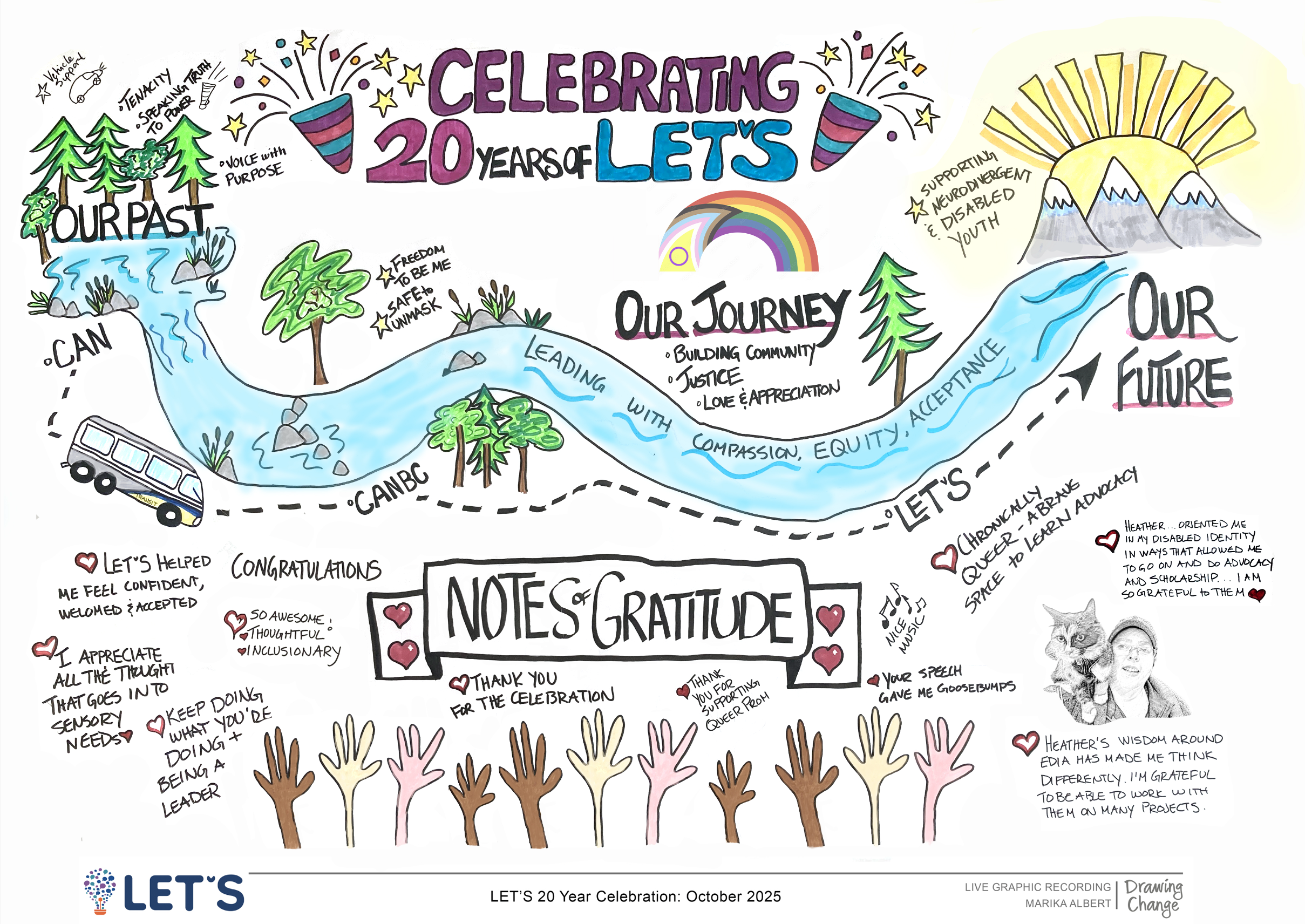
LET’S 20th anniversary Graphic Recording by Marika Albert.
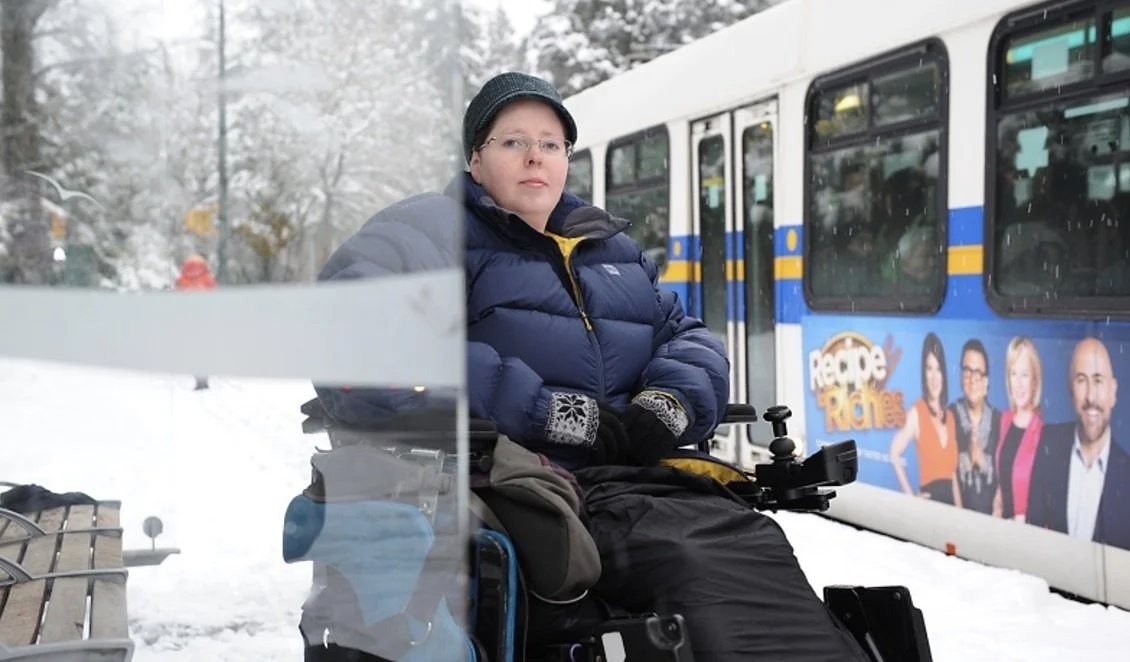
Heather in a power wheelchair at a bus stop on a snowy day.
Live Educate Transform Society (LET’S) is an organization run and staffed by disabled and neurodivergent folks, most of whom also identify as 2SLGBTQIA+. Since this spring, WTC has collaborated with LET’S to co-create our Disability Justice and Local Government: Tools for Change workshop which we have since delivered together four times to various organizations in the Lower Mainland to enhance the participation of disabled folks in municipal government.
LET’S just celebrated their 20th anniversary, and we wanted to chat with Heather McCain (they/them), crip doula and Executive Director of LET’S, to learn more about their organization’s roots, values, and what’s coming up in 2026.
What sparked your passion to start LET’S?
Heather: In the early 2000s, I lived in Maple Ridge, where buses only came once an hour, and this impacted how I was able to access my community. I was excited to finally have a power wheelchair, but 50% of the time, transit drivers acted as gatekeepers and said that the ramps weren’t operating.
I wrote a letter to TranLink, but heard no response. At the time, I ran a Chronic Pain Support Group, and in one discussion, a member suggested that I could create an organization to fill this advocacy need, and in 2005, the Citizens for Accessible Neighbourhoods (CAN, now LET’S) was formed. After the creation of CAN, I wrote the same letter to TransLink, but this time as Executive Director, and I received a response one week later.
Locally, I began to deliver disability awareness seminars as well as create and perform accessibility audits. I was fortunate to meet mentors who taught me skills that I used to this day.
Through my work, I learned that many people did not have access to information about people with disabilities until they became disabled. I had been a writer from a young age, and one day, I walked into the Maple Ridge-Pitt Meadows Times newspaper office and suggested to the editor that I become a monthly contributor. My column “Abilities,” ran for five years and every month, I interviewed a person with a disability or health issue, visible or invisible.
The response to this column was overwhelming, as health issues are often kept in the dark and not openly discussed. This column gave people permission to share their true selves and their true stories. It was a powerful example of how important storytelling is to understanding and initiating conversation.
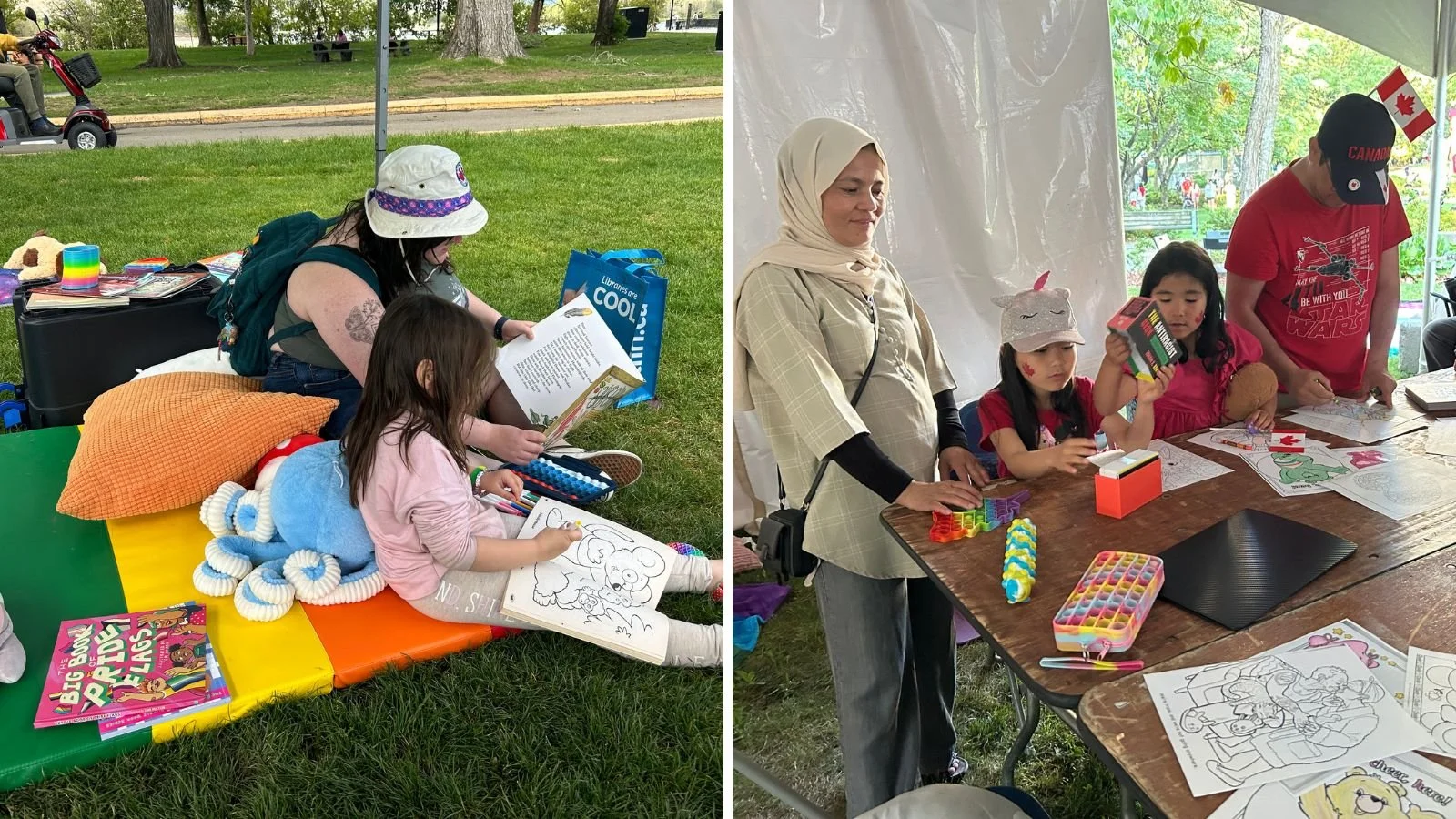
Families using the low sensory tents and spaces that LET’S provided at multiple PRIDE events this summer.
As a long-time advocate for disability justice, what are some recurring issues and concerns that you’re hearing from your community, and how has that changed over time?
Heather: Poverty is still one of the most consistent concerns of structural violence. Disability assistance remains well below the poverty line, leaving people to choose between medication, food, housing, and mobility aids. For those who are denied disability supports, they are often forced to work at the expense of their health or stay in precarious or unsafe situations just to afford rent and food.
Employment systems are still largely built around neuronormative, capitalist, productivity-at-all-costs expectations and at the same time, inaccessibility remains a daily reality. Folks encounter stairs, broken elevators, inaccessible forms, and staff who are misinformed or dismissive. There has been some improvement, but without enforceable accountability mechanisms and reporting, we will continue to not meet the needs of many.
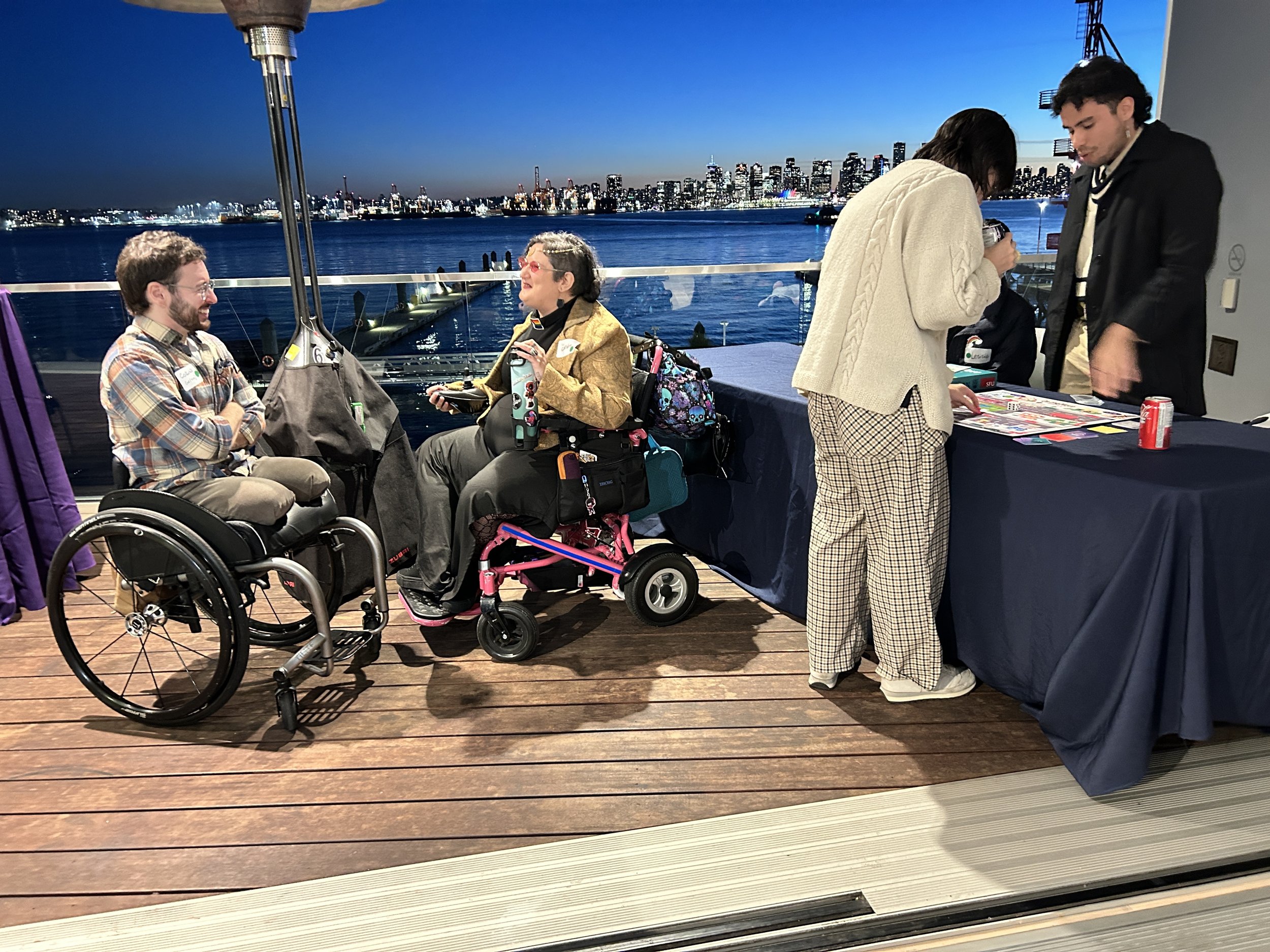
Two long-time LET’S members, Corin Parson and Cat Webb, at the 20th anniversary celebration held at Polygon Gallery this October.
What I’ve seen is that the disability and neurodivergent communities are finding ways to support each other in self-employment, resource-sharing, flexible work, and mutual aid as ways to survive and build community on our own terms. That said, this additional labour shouldn’t be the responsibility of the people who are already burdened by inequities and systemic oppression. Community has and continues to keep us alive—as much as we can—and that kindness and care are treasured and appreciated, even as we wished it wasn’t so required.
When the organization started, there was almost nothing available on chronic pain. My library had one very negative book, and there were no public conversations in my community until I started a chronic pain support group and started writing a local column.
Now, there are countless books, podcasts, social media threads, and peer-led groups where people can find language, validation, and connection. That growth in community knowledge has been huge, and overall representation of disabled people in the media has improved. Increasingly, people with disabilities and neurodivergent folks are using their lived experience to shape policy, practice, and public conversations for our communities.
LET’S has advocated in different ways within local government. What are some key takeaways from your experience?
Heather: In order to create meaningful change that avoids loss of trust in local government by community members, disability awareness training (and other equity work) needs to be embedded in policy, local governments need to prioritize lived expertise in decision-making, and have enforceable accountability mechanisms.
Disability awareness has the greatest impact when properly resourced, with dedicated funding, time, and staffing. A disability justice framework, intersectional lens, and decolonial lens are essential to addressing the root causes of systemic injustices and linking ableism to key civic issues like housing, transit, employment, and public spaces.
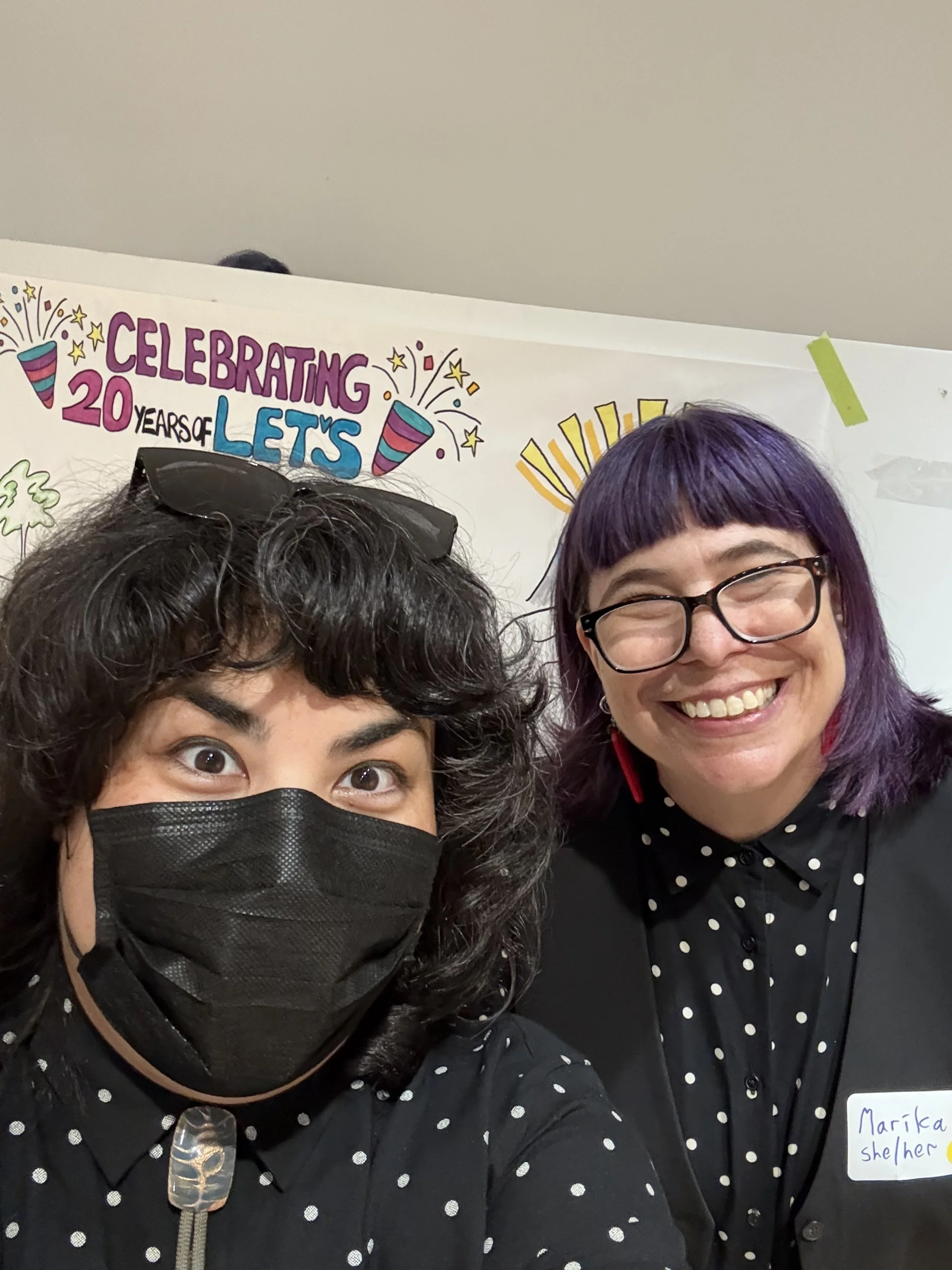
LET’S member Carmel Tanaka and graphic recorder Marika Albert coincidentally wearing matching shirts at the celebration.
LET’S has just celebrated their 20th anniversary, and there’s even more coming up in the new year. What’s next for LET’S?
Heather: LET’S is currently working on putting our workshops online. We are excited about this venture for multiple reasons:
Accessibility — we want people to be able to watch in their own way, at their own pace, and process by their own speed.
Access—we hear from community members who want to attend our workshops, and we want to make them available. Like our current pricing, we will have tiered levels and some opportunities for free viewing.
We have clients who are only able to get a certain portion of their staff/team to participate. Online workshops allow for continual viewing access for more educational outreach and for clients to use for ongoing onboarding training.
Most excitingly, we launched a mentoring program this year and our 1st mentee, Casey Skinner (they/he) created Interacting with Hearing Loss. We are so excited to begin to find ways to pay new content creators to share their stories and experiences.
Most of our disabled, neurodivergent, and 2SLGBTQIA+ members have fallen down one rabbit hole or another and done research of their own because society and medical systems often don’t represent us. We want to help them share their research, fascinations, and rabbit hole findings - and make money too. We have a couple people thinking about potential workshops. We hope to find our next mentee in Spring of 2026, once we’ve set up the online workshops.
December 3 is the International Day for Persons with Disabilities and this year’s theme is: “Fostering disability-inclusive societies for advancing social progress.”
